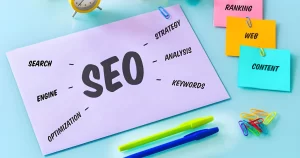

On-page SEO is the process of optimizing individual web pages on your site so that they rank higher in search results. Below are some tips for optimizing your site without wasting time.
Optimize Title Tags
Importance of Title Tags
One of the most important on-page SEO components are title tags. They show up in search results, and they matter for click-through rates.
Best Practices
Primary Keywords- Place primary keywords and key phrases first in the title.
Keep your title between 50-60 characters long so it displays fully in search results.
Brand Name: If your brand is well-known, this will help identify you.
Craft Compelling Meta Descriptions
Role of Meta Descriptions
Although not a determiner of direct ranking, meta descriptions affect user behavior and click-through rate.
Writing Tips
Brevity and to the Point: describe in 155–160 characters what you will find on this page.
Prose Graciously: Do not overstuff your content.
There is no Content Archetype that fits neatly into this usage (because it utilizes a slightly different call to action), but do not shy away from using action-oriented language in your content!
Use Header Tags Strategically
Why Header Tags Matter
When you use headers (H1, H2, H3s etc.), they break down content into sub-parts and show what is equally important or not.
Implementation
H1 Tag: The H1 tag must contain one header for the main title, which should include the primary keyword.
Subheadings (H2 and H3 Tags): Use these to break up content and target related keywords
Optimize Images
Image SEO
Images add value to user experience, but they must be optimized for Image SEO.
Techniques
Image File Names: Use descriptive and keyword-rich file names.
Alt Text: Write alt text that describes the image and contains keywords.
Compression: Compress image content with tools like TinyPNG for faster loading.
Enhance Content Quality
Importance of Quality Content
Great content draws more visitors and attracts backlinks, which gives a SEO boost.
Strategies
Authority: Blogging should be done consistently with depth and detail.
Keyword Integration: Include primary and secondary keywords organically.
Inclusive Use: Lists, bullet points, and visual content—use them.
Internal Linking
Linking Benefits
Internal linking directs users around the site and allows for better understanding of your website layout for search bots.
Best Practices
Related: Link to related content that adds value and captures engagement from the reader.
Anchor Text: Descriptive anchor text with relevant keywords
Hierarchy: Use internal links to a page that you want to be more visible.
Optimize URL Structure
SEO-Friendly URLs
Simplified and descriptive URLs help with user experience as well as SEO.
Tips
URL format: (Use primary keywords in the URL)
Readability: URLs should be readable and comprehensible.
Keep them short: Use a brief URL without any unnecessary characters or numbered identifiers.
Improve Page Speed
Importance of Speed
Pages that load quickly are great for users and better rated by search engines.
Optimization
Caching: Browser caching should be enabled.
Content Delivery Network (CDN): Use a CDN to lower latency.
Minimize Code: Optimize your HTML, CSS and JavaScript
Mobile Optimization
Mobile SEO
With mobile-first indexing, having a mobile-friendly site is vital for top rankings.
Practices
Responsive Design: Implement responsive design to make sure that your site is an attractive looker at all devices.
Mobile speed: Compress some images and activate AMP (Google Accelerated Mobile Pages) for mobile fast loading.
Use Schema Markup
What Is Schema Markup?
Schema markup helps search engines interpret your content more accurately, with potential rich snippet listings in search results.
How to Implement
Structured Data: Use schema. org vocabulary to annotate those objects in the markup like reviews or events or products.
Testing Tool: Verify with Google’s Structured Data Testing Tool
Conclusion
Using on-page SEO techniques can be very effective for improving your website ranking and visibility. You can significantly enhance your site’s performance by optimizing elements such as title tags, meta descriptions, header tags, images and high-quality content. Auditing your SEO strategy regularly and making updates accordingly, should also be of high priority in order to ensure that your site remains competitive in an ever changing digital landscape. Be prepared to actively implement these methods for an even lower traffic exchange strategy on your site.